A strong candidate applied on Monday. The recruiter is focused on closing two other roles. By Thursday, the candidate has not heard back. By Friday, the candidate accepted an offer from a firm that replied on Tuesday. The role was right. The timing was not. OpenClaw monitors every open role for communication gaps and drafts the follow-up before the candidate moves on. Every draft surfaces in Slack for the recruiter's approval before it reaches anyone.
Where placements get lost
A recruiter managing 15 open roles has 15 candidate pipelines running simultaneously. Each pipeline has candidates at different stages — new applications, first interviews, second rounds, offers in progress. Each stage has its own contact cadence. A candidate after a first interview needs a response within 48 hours. A candidate at offer stage needs daily contact. A candidate on hold needs a weekly check-in.
At 15 roles and 40+ active candidates, maintaining those cadences across every thread is a logistics problem. It does not take negligence to let a candidate go quiet — it takes a busy Tuesday. Candidates do not wait. A recruiter who replies on Thursday loses to one who replied on Tuesday.
Independent recruiters and small agencies running 10–20 open roles spend 6–8 hours each week composing candidate follow-ups, stage-progression messages, and client status updates. Each message takes five minutes to compose correctly. Across 40 active candidates, that is 200 minutes of composition that does not bill to any client.
What OpenClaw monitors in a recruitment pipeline
OpenClaw connects to the inbox, the ATS, and the client channel. OpenClaw tracks each candidate's pipeline stage, the last point of contact, and the defined cadence for that stage.
When a candidate's contact interval lapses, OpenClaw drafts the follow-up. When a candidate progresses to a new stage, OpenClaw drafts the stage-progression message. When a client is due a pipeline update, OpenClaw drafts the status report.
| Trigger | What OpenClaw drafts |
|---|---|
| Candidate silence | A follow-up when a candidate has not been contacted beyond the defined interval for their pipeline stage |
| Stage progression | A message to the candidate when their status advances — interview confirmation, next steps, offer details |
| New application | A first acknowledgement when a new application arrives for an active role |
| Client pipeline update | A status summary for the client when a defined update interval is reached |
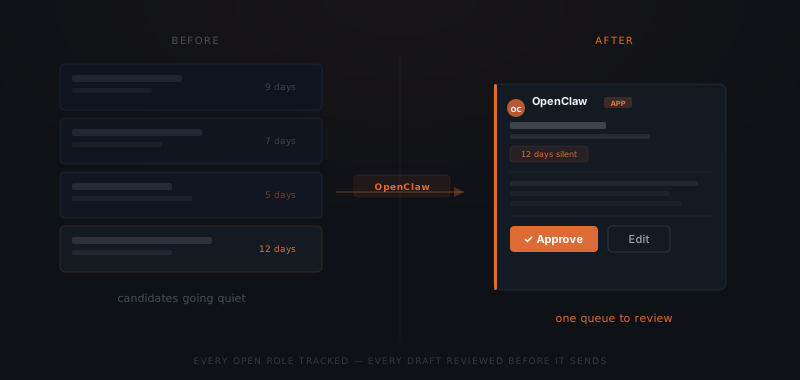
The draft before any candidate contact
OpenClaw monitors the pipeline and drafts the follow-ups — but OpenClaw does not contact candidates automatically. Every draft surfaces in the Slack approvals channel before it reaches anyone. The recruiter approves, edits, or dismisses. Nothing sends without that sign-off. That constraint is enforced at the infrastructure level — there is no configuration that allows OpenClaw to send on its own.
The approval step matters at the candidate level. A follow-up drafted for a candidate who is actively considering a competing offer needs a different tone than one drafted for a candidate who is waiting on a reference check. OpenClaw surfaces the draft with the candidate's stage, the role, and the days since last contact. The recruiter sees why the draft was triggered before deciding whether to approve.
Most drafts take 10–15 seconds to review. The morning approval pass across 40 active candidates takes 15–20 minutes. Candidates hear back within hours rather than days.
What a week looks like with OpenClaw running
The candidate didn't ghost you. They moved to the recruiter who replied first.
Monday: five new applications arrived over the weekend across three open roles. OpenClaw has drafted an acknowledgement for each. The recruiter approves all five before the first client call.
Wednesday: two candidates have passed their 48-hour post-interview window without contact. OpenClaw has drafted follow-ups for both. A third candidate progressed to second round — OpenClaw has drafted the stage-progression message. All three appear in Slack during the mid-week review.
Friday: three clients are due a weekly pipeline update. OpenClaw has drafted a status summary for each, drawing from the week's activity across their open roles. The recruiter reviews, approves, and closes the week.
Ten approvals across the week. The communication layer across 15 open roles is handled. The recruiter's time stays on sourcing and closing.
What recruiters keep doing themselves
OpenClaw handles the cadence and the drafting. Recruiters keep the decisions that move placements.
Candidate assessment — who advances and who does not — stays with the recruiter. Offer negotiations, salary discussions, and role suitability conversations require the recruiter's read on both the candidate and the client. Situations that escalate — a candidate withdrawing, a client changing the brief mid-search — never go through the draft queue.
OpenClaw handles the candidate communication that is timely, stage-appropriate, and repetitive. Recruiters handle the communication that requires a judgment neither the ATS nor the inbox can provide.