Where referral pipeline breaks down
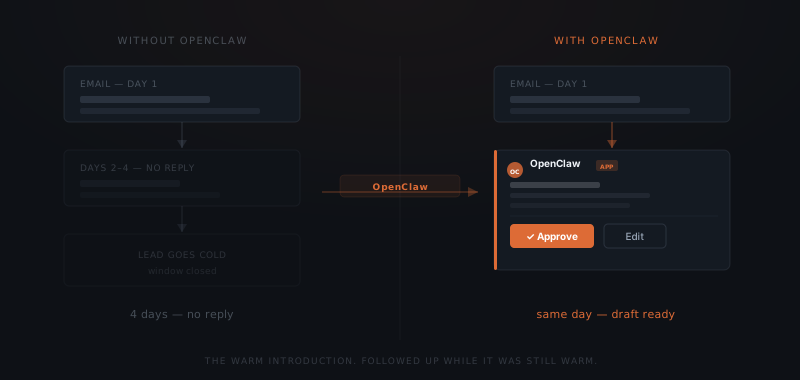
A contact sends an introduction email on a Tuesday afternoon: they want to connect the founder with a client who is expanding and thinks there is a fit. The founder reads it, means to reply before end of day, and gets pulled into something else. Wednesday passes. By Friday, the introduction is four days old. The window where a prompt reply would have felt natural has closed.
The referral did not fail because the relationship was wrong. The referring contact made the introduction in good faith. The referred lead was genuinely interested. The failure happened in the 48 hours between the introduction arriving and the founder finding time to compose a reply.
A referral that gets a reply within 24 hours converts at significantly higher rates than one that waits three days or more. The warmth of a referral is real — and referral warmth is time-limited.
How OpenClaw detects referral introductions
OpenClaw monitors the founder's inbox and identifies referral introductions as they arrive. OpenClaw looks for the signals that distinguish a referral from cold inbound: a shared contact in the thread, language that frames one person to another, a known sender introducing an unknown recipient.
When OpenClaw identifies a referral, OpenClaw logs it and begins building the draft. OpenClaw notes the referrer's name, the referred contact's name and any context available in the thread, and the date the introduction arrived. The log gives the founder a timestamped record of every referral that has come in — including any that have not yet received a reply.
The draft reply for each introduction
OpenClaw drafts the reply using the referrer's message and whatever context is available about the referred contact. The draft names the referrer, reflects the framing of the introduction, and opens the conversation in a way that matches the warmth of the source. The draft is not a generic outreach template applied to a referral situation.
The draft covers three things: an acknowledgment of the referrer, a brief opening to the referred contact, and a specific next step — typically a short call to understand the fit. OpenClaw adjusts the tone based on the relationship context. A referral from a long-standing client produces a warmer draft than a referral from a newer contact.
If the referrer included context about the referred contact's situation, OpenClaw incorporates that context into the draft. A referral introduction that mentions the contact is expanding a team produces a draft that addresses that directly — not a "great to meet you" message that could have been sent to anyone.
The approval step
The draft appears in the Slack approvals channel within hours of the introduction arriving. The card shows the original introduction email, the drafted reply, and the referrer's name.
The referral was warm. The reply arrived four days later. The window had already closed.
The founder approves, edits and approves, or dismisses. Dismissing does not close the referral — OpenClaw logs it as pending and can resurface it on request. The founder can also add context before approving: "this contact is already in a conversation with us — skip the intro framing." OpenClaw updates the draft accordingly.
Nothing sends until the founder approves. The referred contact receives the reply from the founder's own address, in the founder's name.
The referral pipeline OpenClaw builds over time
Every referral that arrives gets logged with the referrer, the referred contact, the date, the draft status, and the reply timestamp. After 90 days, that log becomes a referral map — which contacts send the most introductions, which introductions convert to conversations, which sources consistently produce the right kind of lead.
Most founders who rely on referrals do not have that data. Referrals arrive and are handled or not handled, with no systematic record of either outcome. OpenClaw builds the record as a side effect of handling the follow-up.
The referral map is not actionable from any single introduction. The pattern becomes visible after enough introductions have been processed — and the founder who can see the pattern can invest in the referral relationships that are actually producing results.